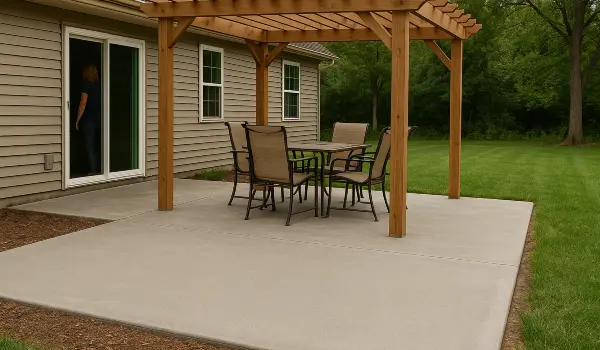
A sidewalk that once felt level can become a trip point surprisingly fast. Homeowners often notice cracking that widens after rain, uneven slabs lifted by roots, or surface flaking that leaves loose grit near the entry. Concrete Contractor Hutto evaluates the full walkway, not just the most visible break, because settling beneath one slab can place stress on the next section and allow water to keep working into the base.
Small hairline cracks with no height difference can sometimes wait while you monitor them through a season. Replacement should not wait if slabs have settled, edges sit more than about one-half inch apart, spalling exposes rough aggregate, or pooling water collects against the house. Those conditions create slip hazards and can direct moisture toward the foundation. A broken sidewalk near a driveway, porch, or public-facing entrance deserves prompt attention.
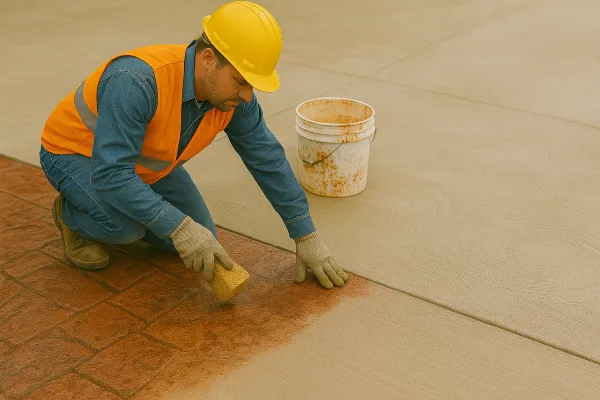
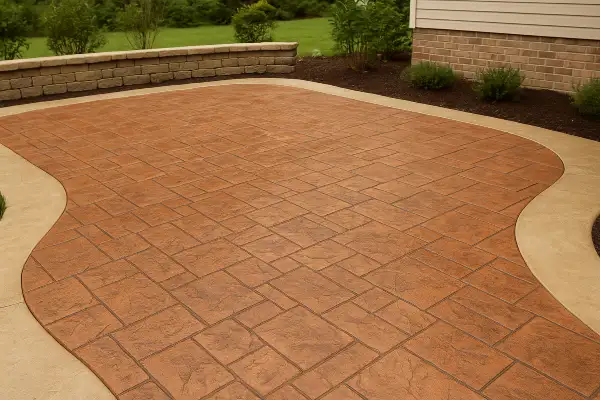
The job usually begins by removing damaged concrete and excavating the soft or unstable material underneath. The crew grades the exposed area so water moves away from the home, then installs and compacts a sub-base of aggregate. Forms establish the width, slope, and edges of the new path. Depending on the slab size and site conditions, rebar or mesh is positioned to help the concrete act as a unified section rather than separate under movement.
Learn more about our expert Stamped Concrete Services services.
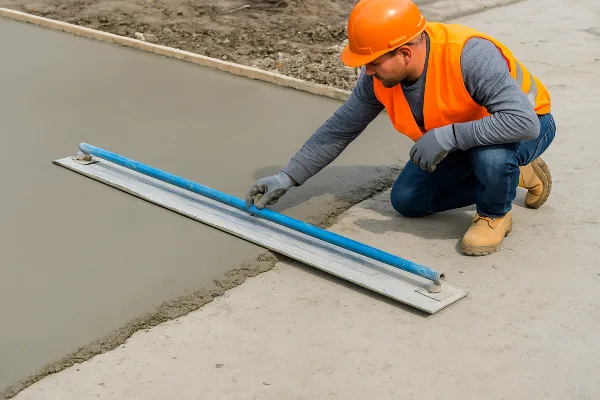
After forming, concrete is poured, spread, and finished to create a slip-resistant walking surface. Expansion joints are placed where the sidewalk meets a porch, driveway, or existing slab so normal movement does not force the sections together. Control joints are cut or tooled at planned intervals to guide future cracking. The concrete then cures before regular foot traffic resumes, and a sealer may be applied where appropriate. Stamped Concrete Services use a similar sequence, with additional texture and color steps.
A newer home with a single settled panel may need limited removal, while an older property can reveal washed-out sub-base, tree roots, or several slabs tied together by failed joints. Access matters too: a front walk beside a driveway allows equipment close to the work, while a narrow side yard may require more hand work and smaller tools. Concrete Walkways also vary in width, edge layout, drainage slope, and the connection points at steps or patios.
Material and timing choices affect both appearance and service life. A thin patch can hide surface flaking and may buy roughly two years if the underlying slab is stable, but it will not correct settlement or a weak base. Full replacement addresses excavation, grading, and reinforcement, which can support a walkway for many more seasons—often around fifteen years with suitable conditions and care. Hot Texas weather, rain, and cold snaps influence pour scheduling and curing protection.
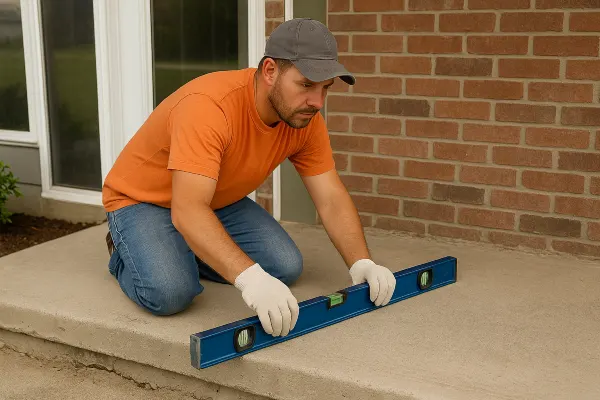
Ask each contractor what caused the sidewalk failure and how the proposed work addresses that cause. An estimate should identify demolition, excavation depth, sub-base preparation, forms, reinforcement, concrete thickness, joint placement, finishing, cleanup, and disposal of broken slabs. If drainage is involved, ask where water will flow after grading. A vague quote that only says “replace concrete” leaves important decisions about aggregate, slope, and control joints unanswered.
Before the first slab is removed, a good contractor should explain access for wheelbarrows or equipment, how nearby landscaping and irrigation lines will be protected, and how long the concrete needs before foot traffic. Ask where expansion joints will sit against the porch or driveway and whether tree roots or soil movement may return. For a Hutto, TX property, also discuss weather plans, curing methods, and what the finished surface will look like at the edges.
CONCRETE CONTRACTOR HUTTO
351 Exchange Blvd, Hutto, TX 78634
(512) 729-9281
info@concretecontractorhutto.com
Hours of Operation
Open 24 Hours